







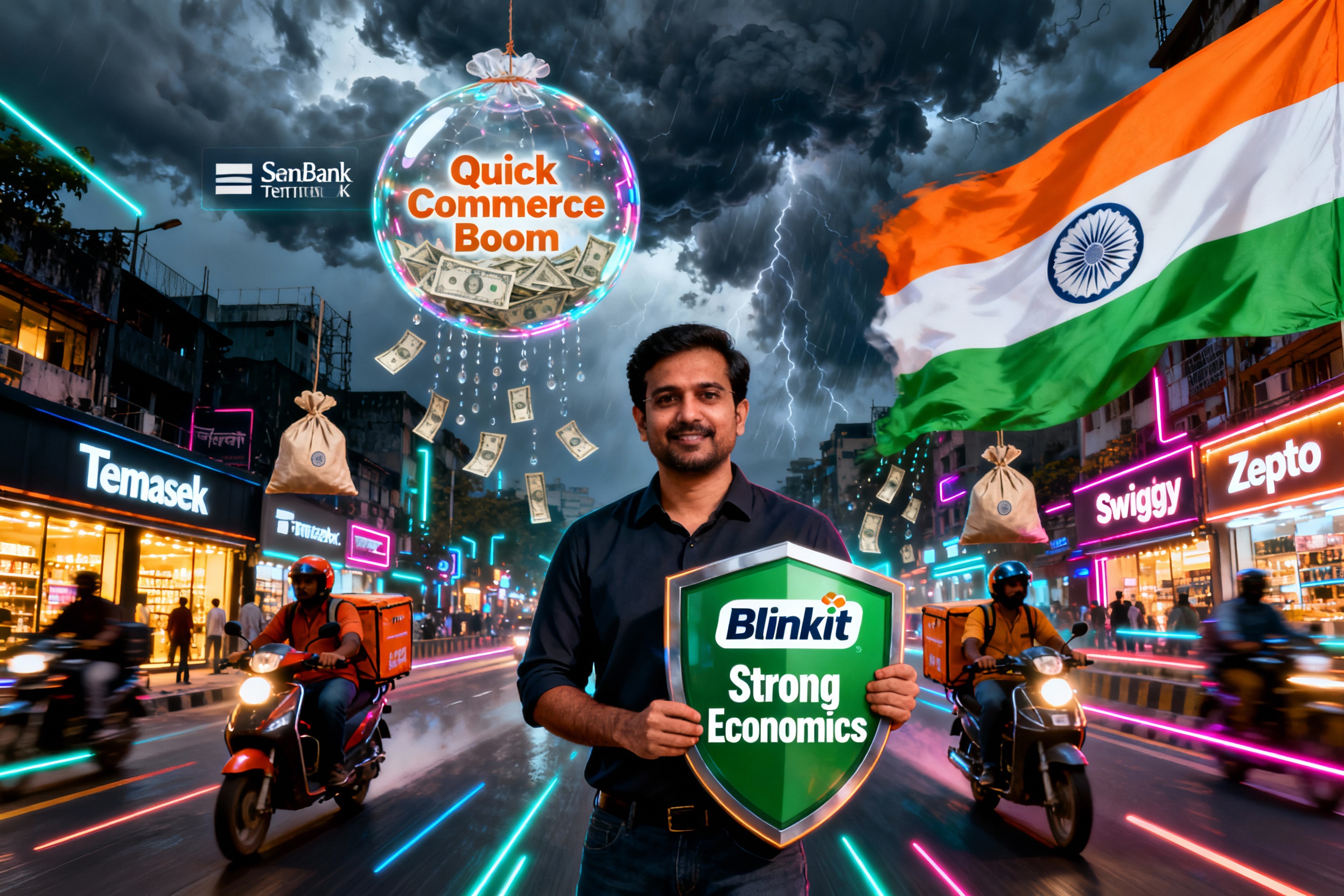
India’s quick commerce industry—once seen as a game‑changing innovation in urban retail—might be heading toward a major correction, warns Blinkit CEO Albinder Dhindsa.
Despite billions poured in by SoftBank, Temasek, and Middle Eastern sovereign funds, the model’s heavy reliance on constant fundraising is now showing its limits. As cash supplies tighten, Dhindsa believes only companies with efficient logistics, strong unit economics, and disciplined strategy will survive the next phase.
Competitors like Swiggy’s Instamart and Zepto are raising new rounds to stay competitive, but both highlight how capital-intensive this business remains. Dhindsa cautioned that when such imbalances exist, market corrections often strike swiftly—catching many by surprise.
While Blinkit currently leads the pack, backed by over $2 billion in reserves and strong operational execution, the CEO admits profitability remains a challenge due to ongoing expansion into new markets. The company plans to extend services beyond metros by partnering with local entrepreneurs and improving supply chain infrastructure, especially in smaller towns.
Dhindsa envisions the boundary between traditional e-commerce and instant delivery gradually blurring. Blinkit intends to expand only in categories where it can sustainably improve customer experience—avoiding the pitfalls of discount-driven, short-term growth.
“We will not chase growth for the sake of growth,” Dhindsa asserted. “A sector reset is inevitable—the question is not if, but when.”
The coming months could redefine which players thrive and which fade as India’s quick commerce landscape evolves toward greater consolidation, selective expansion, and smarter discounting.