






The Big Story
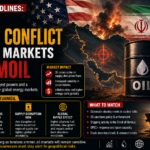
India’s economy narrowly avoided a major shock last week as geopolitical tensions flared in the Middle East. The Iran-Israel conflict threatened to disrupt global oil supplies and escalate military tensions. Instead, the episode became a catalyst for India to accelerate its defense sector ambitions.
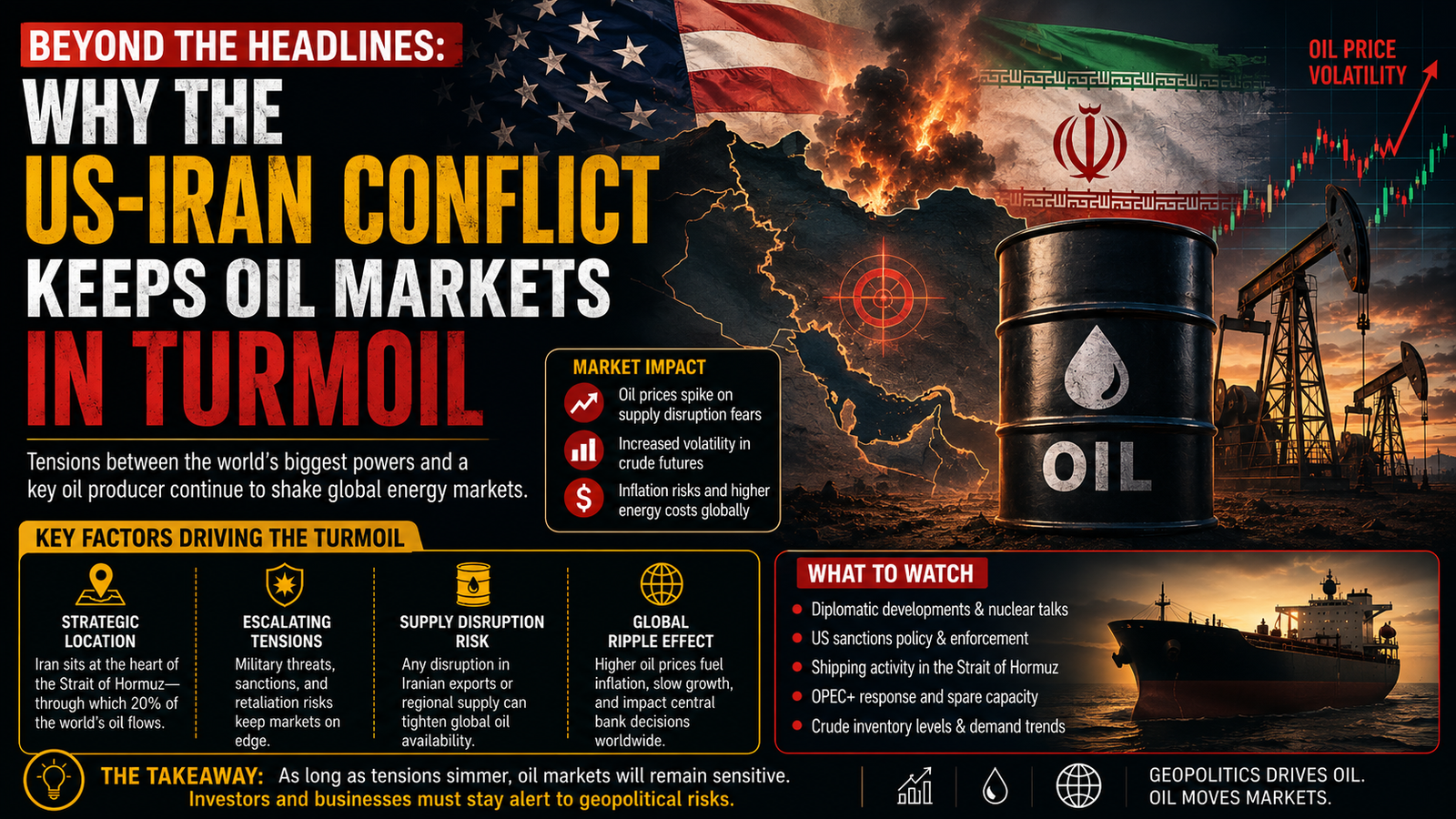
A ceasefire was reached on Wednesday between Iran and Israel after a U.S.-led bombing campaign, which President Donald Trump claimed had crippled Iran’s nuclear capabilities. Oil prices, which spiked briefly, stabilized—pulling India back from the brink of an energy crisis. But the event laid bare India’s strategic vulnerabilities.
Although India no longer imports oil from Iran, roughly 40% of its crude passes through the Strait of Hormuz—a vital oil chokepoint. Any disruption there would have serious consequences. SBI Research estimates that every $10 increase in crude oil prices could push consumer inflation up by 35 basis points and slow GDP growth by 30 basis points.
Madan Sabnavis, chief economist at the government-owned Bank of Baroda, warned that a prolonged oil price above $100 per barrel could cause a “major impact,” despite India’s ability to absorb a temporary 10% hike.
India’s diplomatic position is also precarious due to geopolitical tensions. On the one hand, Iran has strategic investments such as the India-operated Chabahar port. On the other hand, it is heavily dependent on Israel for defense imports.
India is the largest buyer of Israeli arms, accounting for 34% of Israel’s defence exports, according to a March 2024 report by the Stockholm International Peace Research Institute. In contrast, Israel supplies 13% of India’s imported weapons.
India’s recent “Operation Sindoor” against Pakistan showcased the extent of this dependence, using a combination of legacy Russian equipment and advanced Israeli systems such as Heron drones and Barak-8 missiles.
Russia’s ongoing war in Ukraine has further complicated matters. Delays and reliability issues have plagued India’s defense procurement from Moscow, historically a primary arms supplier. Russian-made gear like the T-90S tank has shown weaknesses on the battlefield, prompting India to seek alternatives.
Domestic Defense on the Rise
In response, India is increasingly focused on building a self-reliant defense industry. Though the transition will take years—given that, as of 2023, 90% of its armored vehicles and 70% of its fighter jets were of Russian origin—the strategic shift is gaining momentum.
“This will only deepen global commitment to increasing defense budgets, a trend already accelerated by the Russia-Ukraine war,” said Anna Mulholland of Pictet Asset Management, whose emerging markets fund has significant exposure to India.
Turning Crisis Into Opportunity
The current crisis has put the spotlight on state-owned Bharat Electronics Ltd. (BEL), a major defense contractor. Analysts at JPMorgan see this as a “critical moment” for BEL, whose stock price has risen nearly 38% so far this year.
According to JPMorgan’s Atul Tiwari, BEL’s growth is driven by a strong order pipeline, persistent geopolitical risks, and robust returns. A major milestone is “Project Kusha,” India’s indigenous answer to Russia’s S-400 air defense system, with BEL playing a central role.
Looking ahead, India aims to transform its defense sector into a global export force. The government plans to double defense exports to nearly $6 billion annually by 2030, as per Jefferies.