






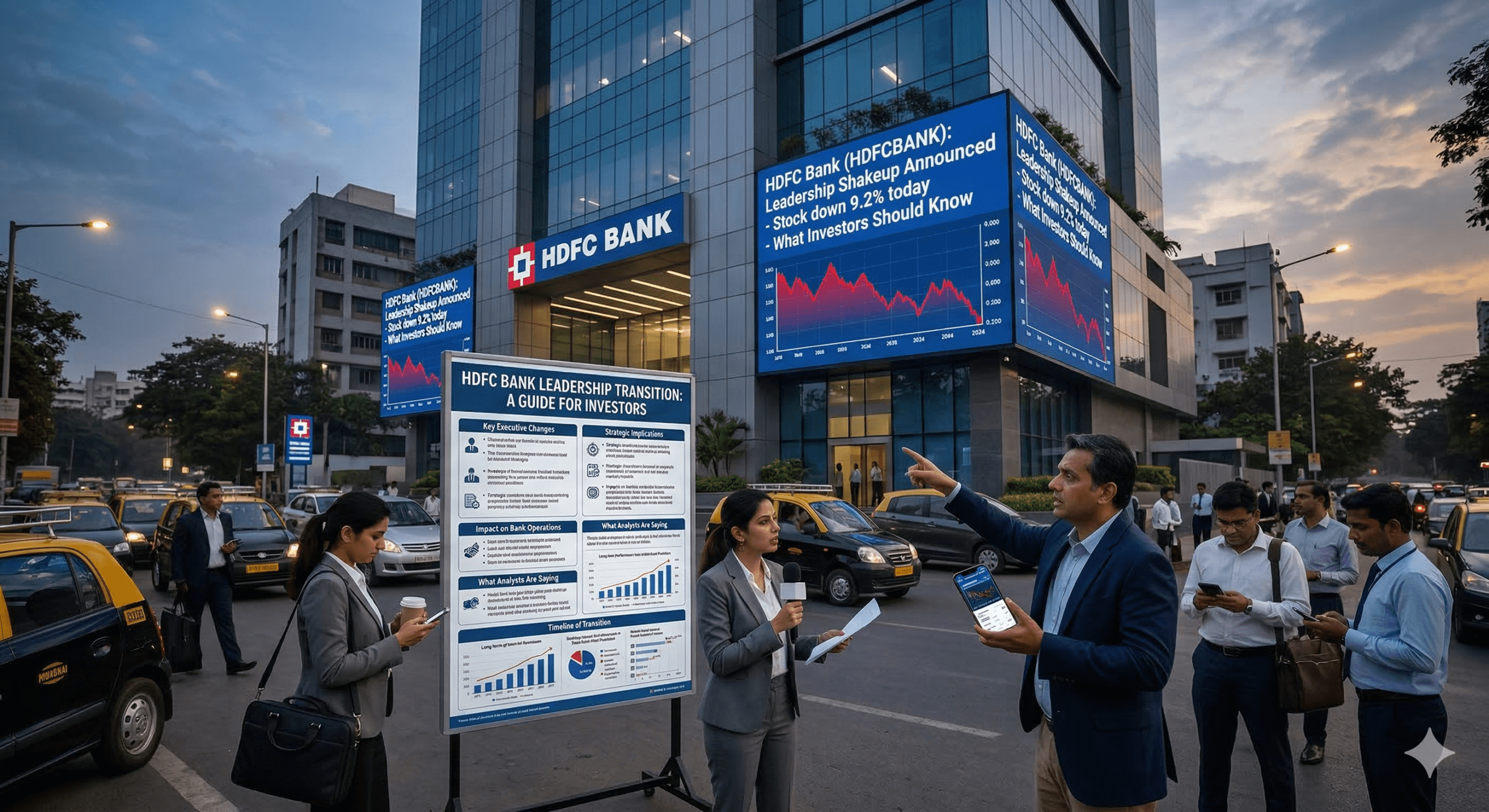
It has been a turbulent Thursday for HDFC Bank. India’s premier private lender saw its shares plummet by nearly 9% in early trade today, March 19, 2026. The volatility followed the sudden exit of part-time Chairman Atanu Chakraborty, an event that wiped out over ₹1 lakh crore in market valuation within minutes of the opening bell.
While the stock has since staged a partial recovery—trading at ₹813.85 (down 3.48%) by midday—the suddenness of the move has left the street searching for answers.
Here are the five critical takeaways for every investor.
1. The Resignation: A Question of “Ethics”
The primary catalyst for the sell-off was the resignation of Atanu Chakraborty. In a filing that caught the market off-guard, Chakraborty cited a misalignment between his personal values and “certain happenings and practices” within the bank over the last two years.
While he confirmed there were no other hidden agendas behind his departure, the use of the words “values and ethics” in a formal resignation is a red flag for institutional investors who prize corporate governance above all else.
2. Rapid Succession: Keki Mistry Steps In
In a move to project stability, HDFC Bank immediately appointed veteran Keki Mistry as the new part-time chairman. At 71, Mistry is a heavyweight in the Indian financial sector. During an emergency investor call, he sought to soothe nerves, stating that there are “no material matters” or operational red flags tied to the resignation.
Mistry’s primary mission now is to bridge the “credibility gap” created by his predecessor’s departure.
3. The RBI Weighs In
In a rare move to ensure systemic stability, the Reserve Bank of India (RBI) issued an official statement today. The regulator:
- Approved the leadership transition to Keki Mistry.
- Reassured the market that HDFC Bank remains “well-capitalized.”
- Confirmed that there are no recorded governance concerns regarding the bank’s conduct.
4. High Stakes for Institutional Investors
HDFC Bank isn’t just a stock; it’s a cornerstone of the Indian equity market. Because of its massive size, the price movement affects a huge cross-section of investors:
- Foreign Institutional Investors (FIIs): Hold a dominant 47.67% stake.
- Mutual Funds: Own 26.66% of the company.
With nearly 75% of the bank owned by large institutions, any shift in “sentiment” regarding governance can lead to heavy selling pressure, as seen in today’s session.
5. Impact on the Broader Market
HDFC Bank is the ultimate “heavyweight.” Accounting for nearly 19.69% of the NIFTY BANK index, its 9% intraday drop acted as an anchor on the entire sector. The index fell over 3% today, proving once again that when HDFC Bank sneezes, the Indian banking sector catches a cold.
| Metric | Pre-Drop Value | Intraday Low |
| Stock Price | ₹843.05 | ₹770.00 |
| Market Cap | ₹12.97 Lakh Cr | ₹11.85 Lakh Cr |
| Index Impact | N/A | -3.4% (Nifty Bank) |
The Bottom Line: While the RBI and new leadership are working to project “business as usual,” the market is likely to remain sensitive until more clarity emerges regarding the “practices” mentioned in the resignation letter.
Disclaimer: This post is for informational purposes only and does not constitute financial advice. Stock market investments are subject to market risks. Please consult a SEBI-registered financial advisor before making any investment decisions. The author is not responsible for any financial losses.