

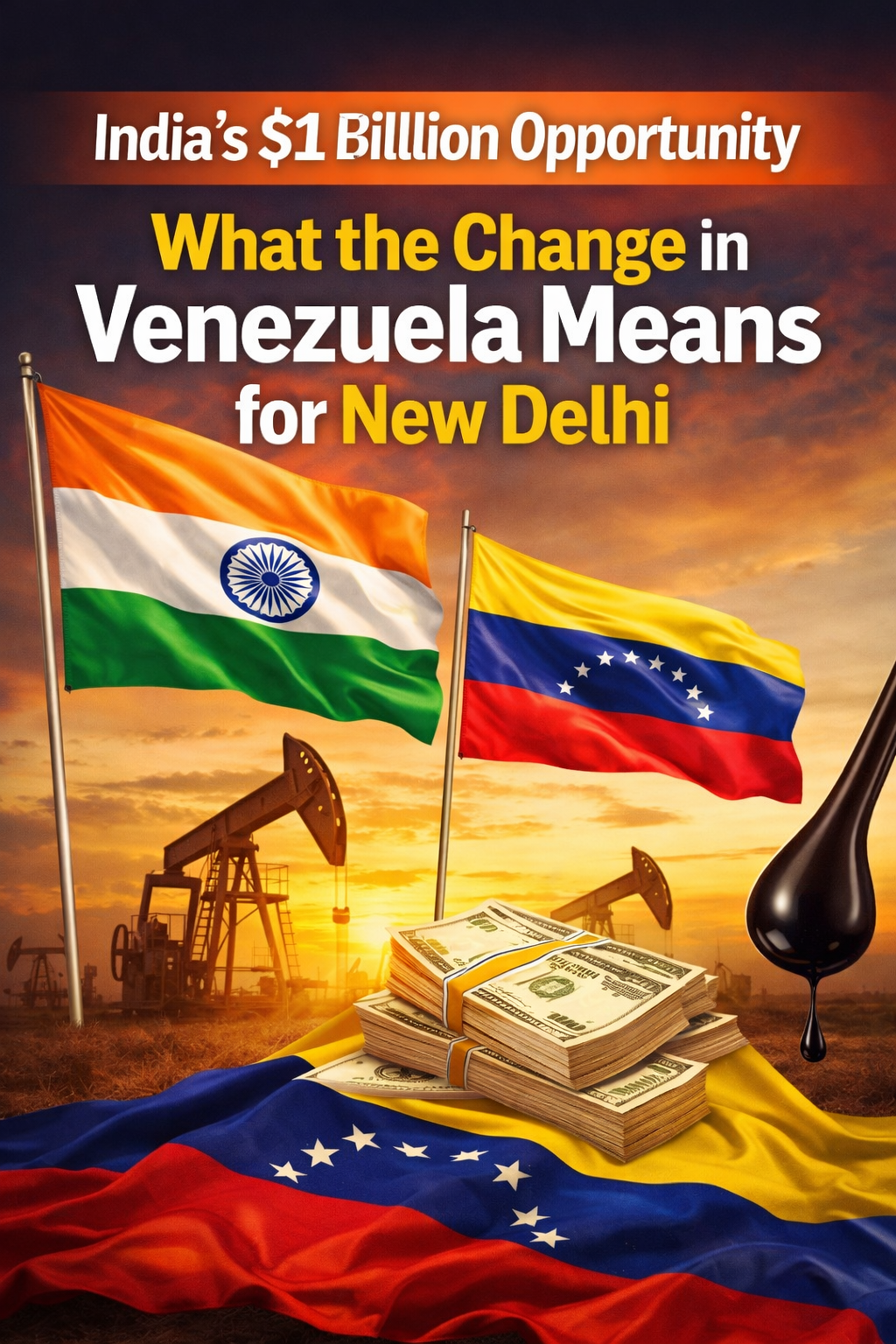
The dramatic capture of Nicolás Maduro by U.S. forces on January 3 has sent shockwaves through the global political landscape. While the situation remains volatile, for India, the shift in Caracas could signal the end of a long-standing financial stalemate and a chance to reclaim nearly $1 billion in trapped assets.
1. The “Frozen” Debt: Reclaiming $1 Billion
For over a decade, India’s overseas energy arm, ONGC Videsh Ltd (OVL), has been caught in a financial limbo. The company holds a 40% stake in the San Cristobal oilfield but has been unable to access its share of the profits due to Venezuela’s economic collapse and sanctions.
- The Dividend Backlog: OVL is owed approximately $536 million in dividends dating back to 2014.
- The Unaudited Gap: Since Caracas stopped permitting formal audits years ago, experts believe an additional $500 million is likely owed for the subsequent period, bringing the total claim close to the $1 billion mark.
A transition in leadership and the potential easing of U.S. sanctions could finally allow these funds to flow back to India.
2. Reviving a Dormant Oil Giant
Beyond the cash recovery, India eyes a massive boost in production. Currently, the San Cristobal field is underperforming, trickling out only 5,000–10,000 barrels per day (bpd). If the infrastructure is rebuilt and sanctions are lifted, analysts believe that output could skyrocket back to its potential of 80,000–100,000 bpd.
With President Trump signaling that U.S. companies will lead the charge in rebuilding Venezuela’s degraded oil sector—which holds the world’s largest proven reserves (303 billion barrels)—Indian refiners are watching closely.
3. Will This Change India’s Energy Map?
Despite the potential, experts are urging a reality check. Data from the Global Trade Research Initiative (GTRI) highlights how much the relationship has cooled:
- Trade Slump: Crude imports from Venezuela dropped a staggering 81.3% in the last fiscal year, falling from $1.4 billion to just $255.3 million.
- Refinery Readiness: Major Indian players like Reliance Industries and IOC are technically equipped to process Venezuela’s heavy crude, but shifting away from current suppliers (like Russia) won’t happen overnight.
4. A Balanced Diplomatic Tightrope
While the financial gains are tempting, India’s Ministry of External Affairs (MEA) has maintained a “cautious and concerned” stance. The government’s priority remains the safety of Indian nationals in Caracas and the protection of “strategic autonomy.”
The consensus among analysts is clear: while the door is opening for India to diversify its energy basket and recover lost debts, the actual “oil boom” could take years of investment and political stabilization to realize.
Key Takeaway for Readers
The collapse of the Maduro administration offers India a rare chance to settle old debts and secure a future stake in the world’s largest oil reserves. However, given the geographical distance and the ruined state of Venezuela’s infrastructure, this is a long-term strategic play rather than an immediate fix for India’s energy needs.