





The government’s renewed fiscal commitment is seen as a response to the slowdown affecting most sectors outside of China’s large trade surplus. However, experts note that the country’s continued emphasis on both consumption and investment reveals the ongoing tension between production-led and demand-driven growth.
Beijing plans to roll out targeted measures to boost household income, expand urban and rural consumption, and strengthen the service sector. Yet, analysts anticipate that these steps will likely be moderate, with China continuing to rely heavily on investment to sustain short-term growth.
Next year’s policy direction may include liquidity support through reduced bank reserve ratios and small interest rate cuts. Fiscal measures like a budget deficit near 4% of GDP are expected to continue, reflecting Beijing’s readiness to use state-led spending to stabilize the economy.
China’s export sector remains robust despite higher U.S. tariffs and global trade tensions. Still, risks lurk—prolonged dependence on foreign demand and massive trade surpluses could trigger friction with trading partners such as Europe and raise sustainability concerns about its manufacturing-heavy economic model.
Economists warn that maintaining trillion-dollar trade surpluses while global demand slows could pressure China to rebalance its economy more decisively toward domestic consumption and household well-being.
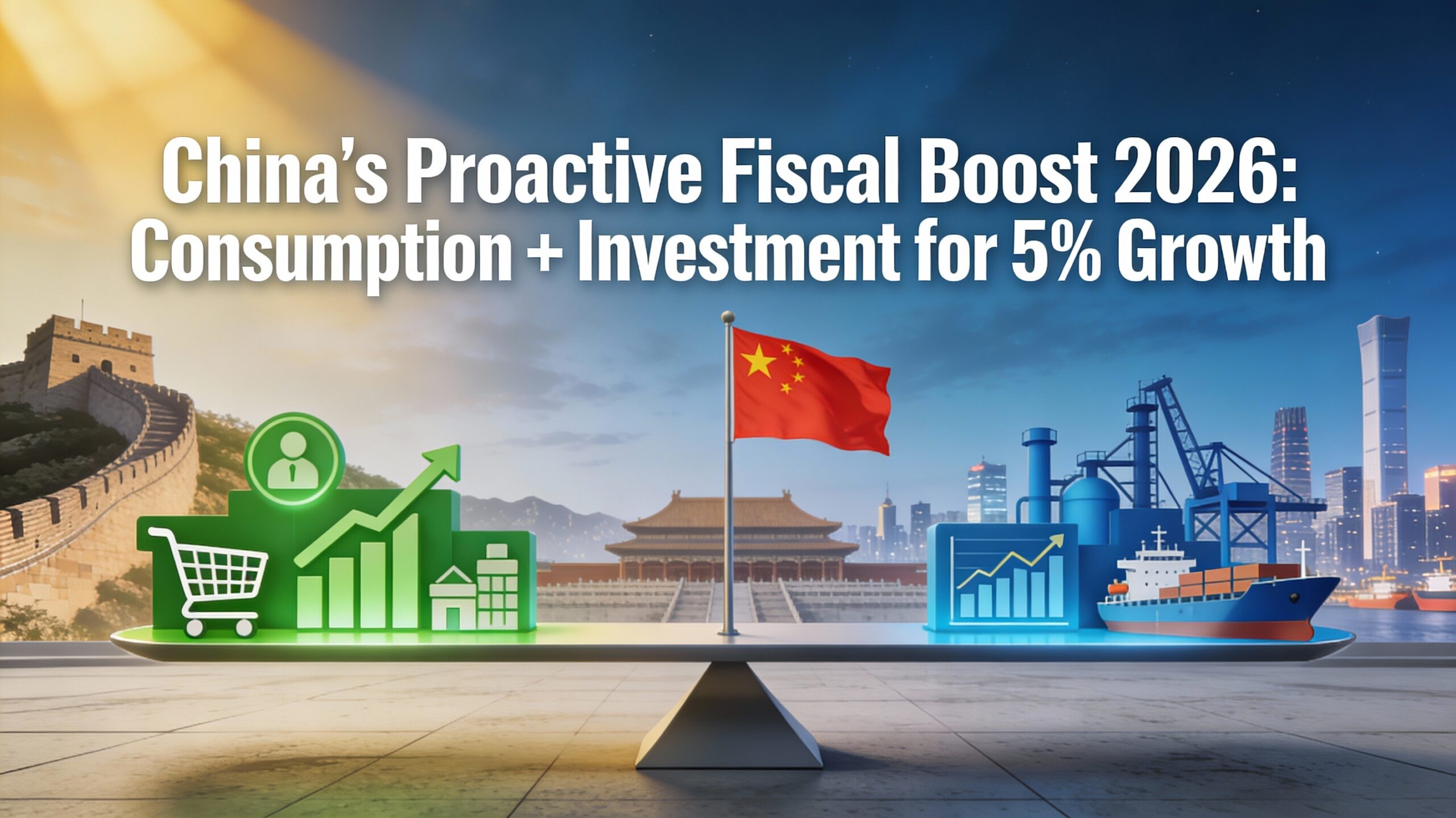
China’s leadership has pledged to maintain a “proactive” fiscal policy in the coming year, aiming to stimulate domestic consumption and investment to sustain growth around 5%. The announcement followed the Central Economic Work Conference held on December 10–11, where policymakers outlined economic priorities for 2026.
The government’s renewed fiscal commitment is seen as a response to the slowdown affecting most sectors outside of China’s large trade surplus. However, experts note that the country’s continued emphasis on both consumption and investment reveals the ongoing tension between production-led and demand-driven growth.
Beijing plans to roll out targeted measures to boost household income, expand urban and rural consumption, and strengthen the service sector. Yet, analysts anticipate that these steps will likely be moderate, with China continuing to rely heavily on investment to sustain short-term growth.
Next year’s policy direction may include liquidity support through reduced bank reserve ratios and small interest rate cuts. Fiscal measures like a budget deficit near 4% of GDP are expected to continue, reflecting Beijing’s readiness to use state-led spending to stabilize the economy.
China’s export sector remains robust despite higher U.S. tariffs and global trade tensions. Still, risks lurk—prolonged dependence on foreign demand and massive trade surpluses could trigger friction with trading partners such as Europe and raise sustainability concerns about its manufacturing-heavy economic model.
Economists warn that maintaining trillion-dollar trade surpluses while global demand slows could pressure China to rebalance its economy more decisively toward domestic consumption and household well-being.