






Even after stepping down as the CEO of Berkshire Hathaway at the end of 2025, Warren Buffett’s final financial footprint left the world talking. With a staggering $370 billion cash pile—mostly tucked away in Treasury bills—many wondered: Why was the world’s greatest investor sitting on the sidelines?
In a recent conversation with CNBC’s Becky Quick, the 95-year-old “Oracle of Omaha” clarified that his massive cash position wasn’t a sign of growing conservative with age. Instead, it was a matter of scale and discipline.
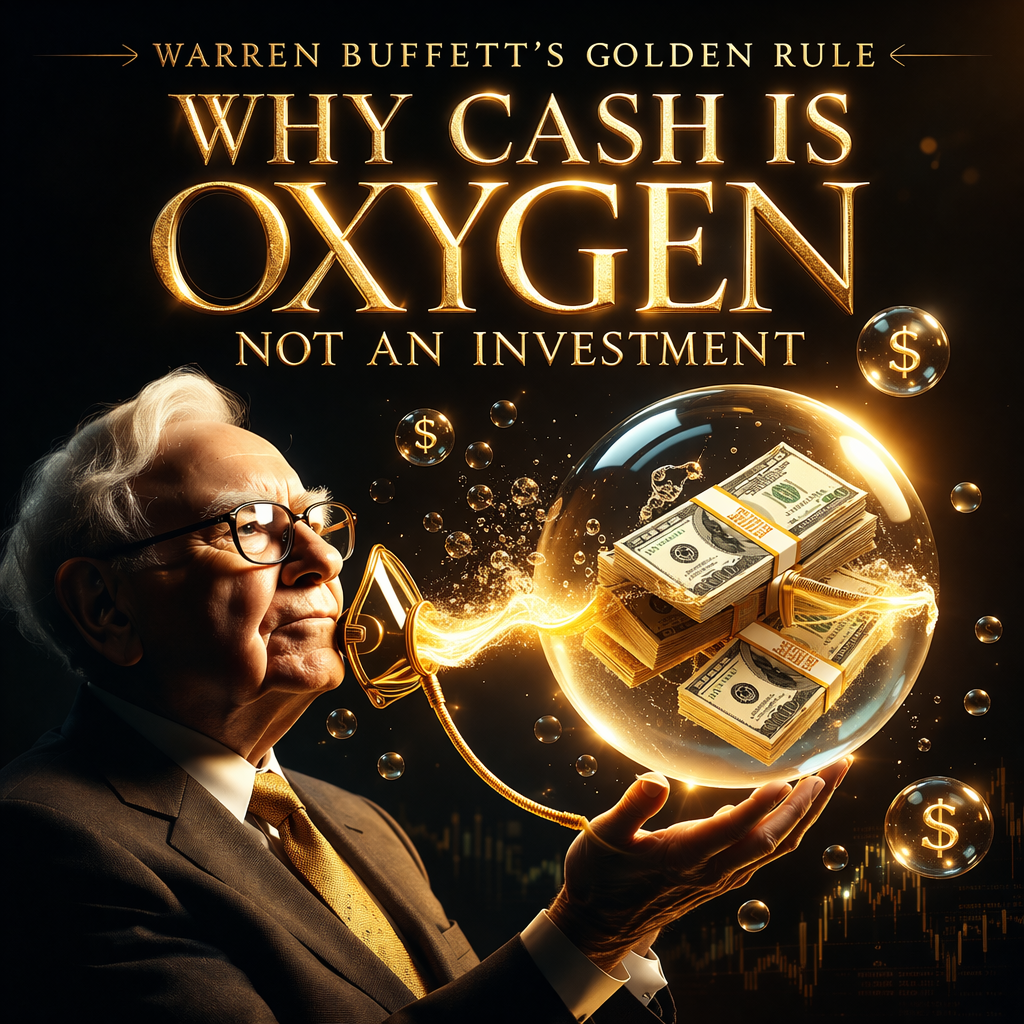
The “Oxygen” Philosophy
Buffett famously describes cash as “oxygen.” * When you have it: You barely notice it. It feels unexciting and “cheap.”
- When you don’t: If you’re without it for even four or five minutes, it’s the only thing that matters.
For a portfolio, cash is a survival tool. It covers obligations and serves as “dry powder” for when the market eventually goes on sale. However, Buffett is firm on one point: Cash is a terrible asset. Unlike stocks or productive businesses, cash doesn’t grow; in fact, inflation slowly eats its purchasing power. Buffett’s preference has always been to own “productive assets” that compound over time, regardless of what happens to the value of the dollar.
Productive Businesses vs. Monetary Instability
In his 2024 shareholder letter, Buffett noted that while runaway inflation can turn bonds into “dust” and erode cash, good businesses adapt. As long as a company provides a service or product people need, it will find a way to thrive despite monetary instability.
The data backs this up. From 1975 to early 2026:
- The S&P 500 surged by nearly 6,700%.
- The Consumer Price Index (inflation) rose by roughly 524%.
The gap is undeniable. Equities are the engine of wealth, while cash is merely the oil that keeps the engine from seizing.
The “MarketTechGuru” Takeaway for Everyday Investors
You might not have $370 billion to deploy, but the principles remain the same:
- Don’t Market Time: Buffett didn’t hoard cash because he predicted a crash; he hoarded it because he couldn’t find a “good deal” at Berkshire’s massive scale. For the average investor, he still recommends a low-cost S&P 500 index fund.
- The Survival Reserve: Financial pros suggest keeping 3–6 months of expenses in a liquid emergency fund. This is your “oxygen.” It ensures you never have to sell your “productive assets” (stocks) at a loss during a market dip.
- Stay Productive: Keep the majority of your wealth in things that grow—equities, businesses, or investments that outpace inflation.
The Bottom Line: Hold enough cash to sleep at night and handle emergencies, but remember that true wealth is built by putting that money to work.