

The Big Picture
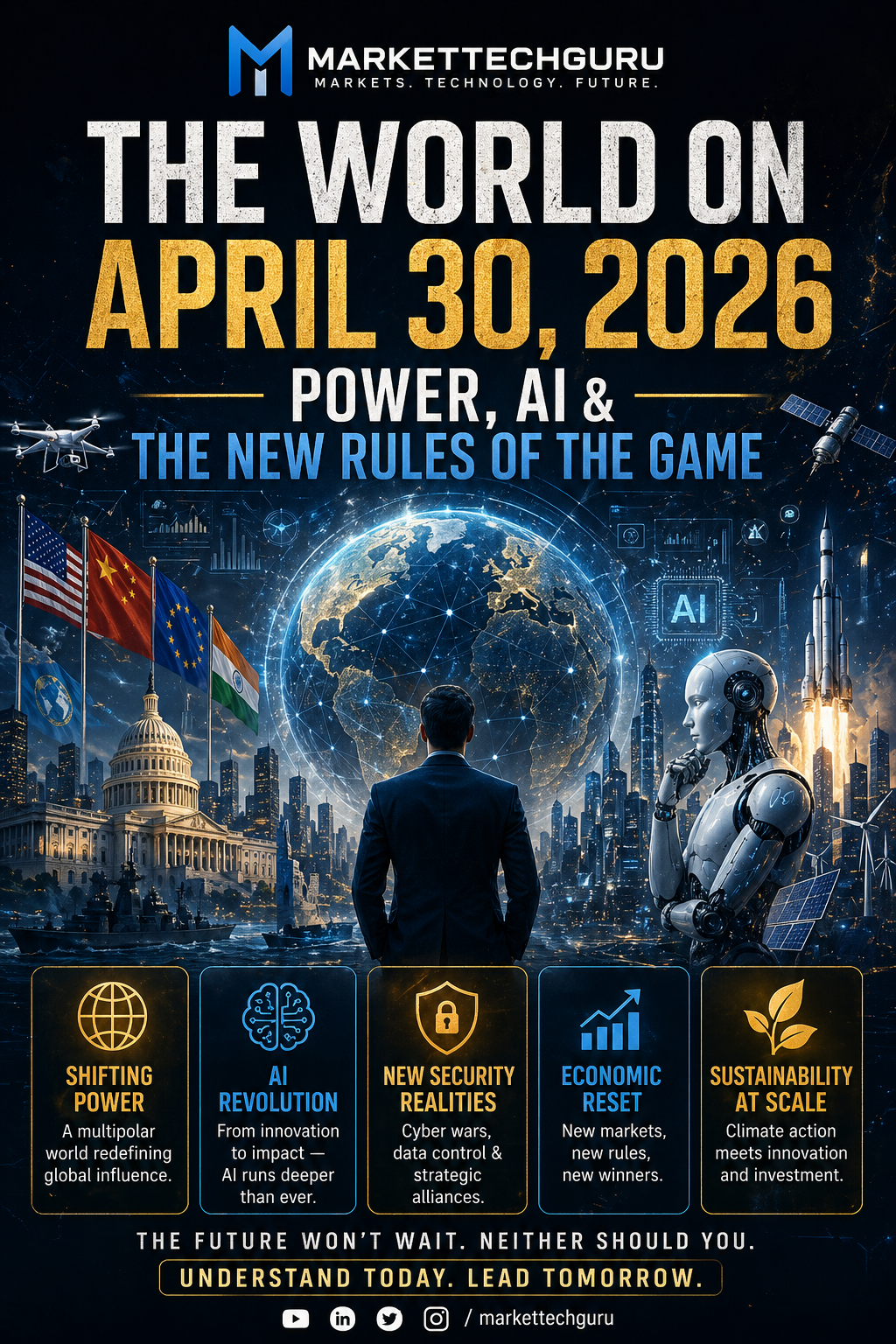
The world economy is entering a period where the biggest investment themes are no longer developing in isolation.
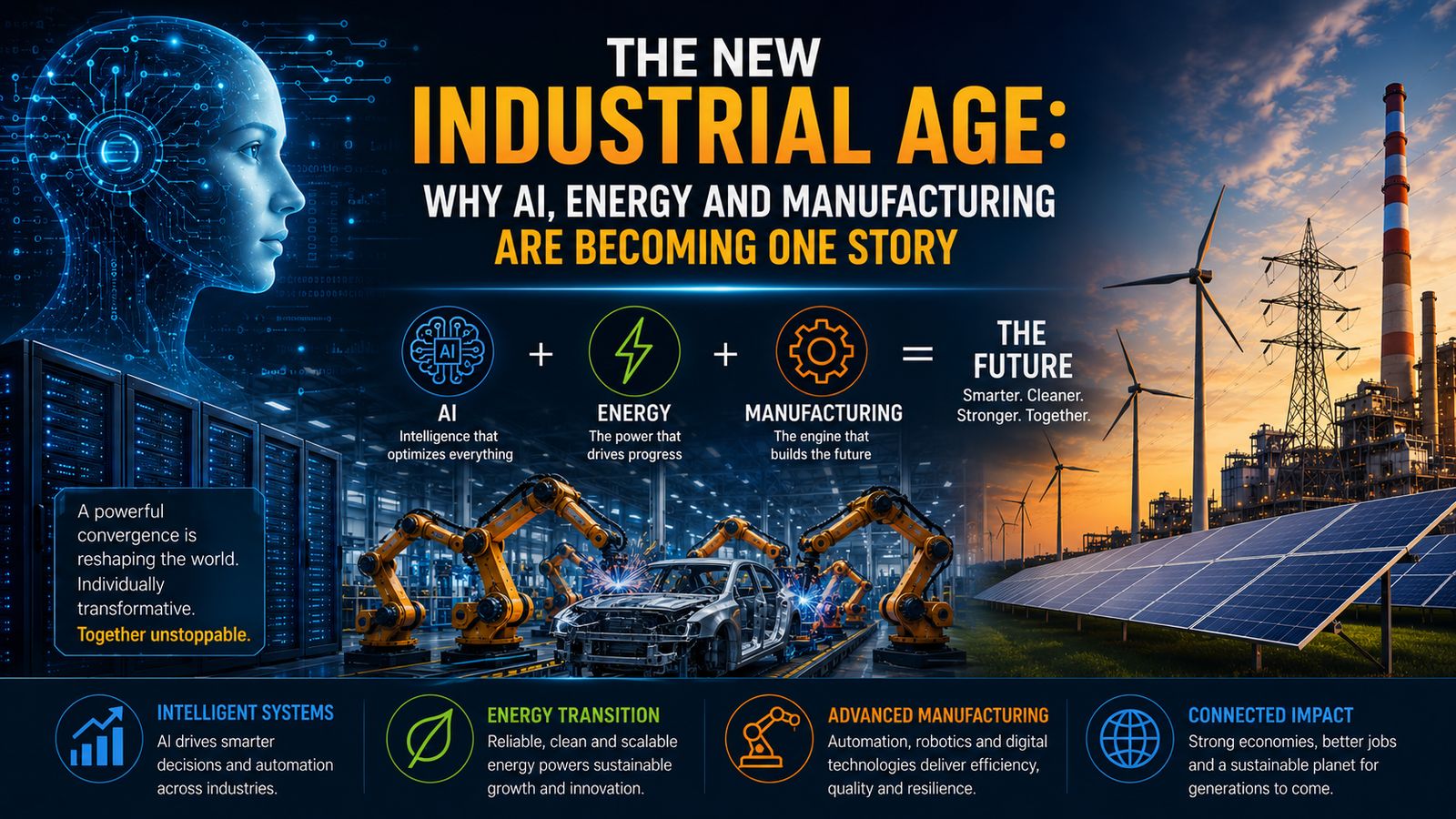
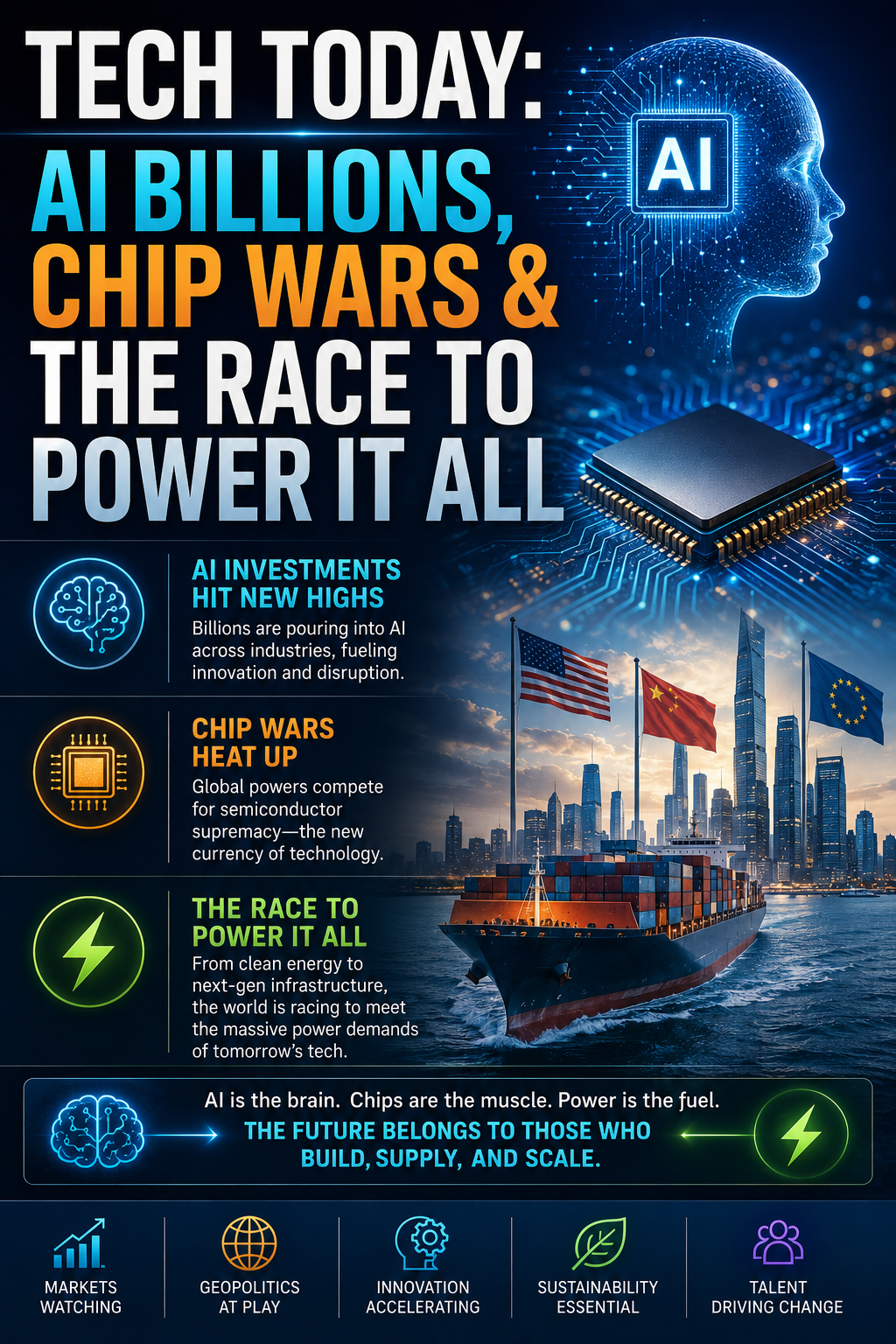
Artificial intelligence is driving demand for semiconductors. Semiconductors are driving the construction of data centers. Data centers require enormous amounts of electricity. More electricity demand requires investment in power generation, transmission networks, transformers, batteries, and critical minerals.
And every part of this chain depends on manufacturing.
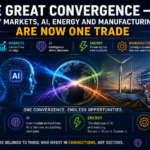
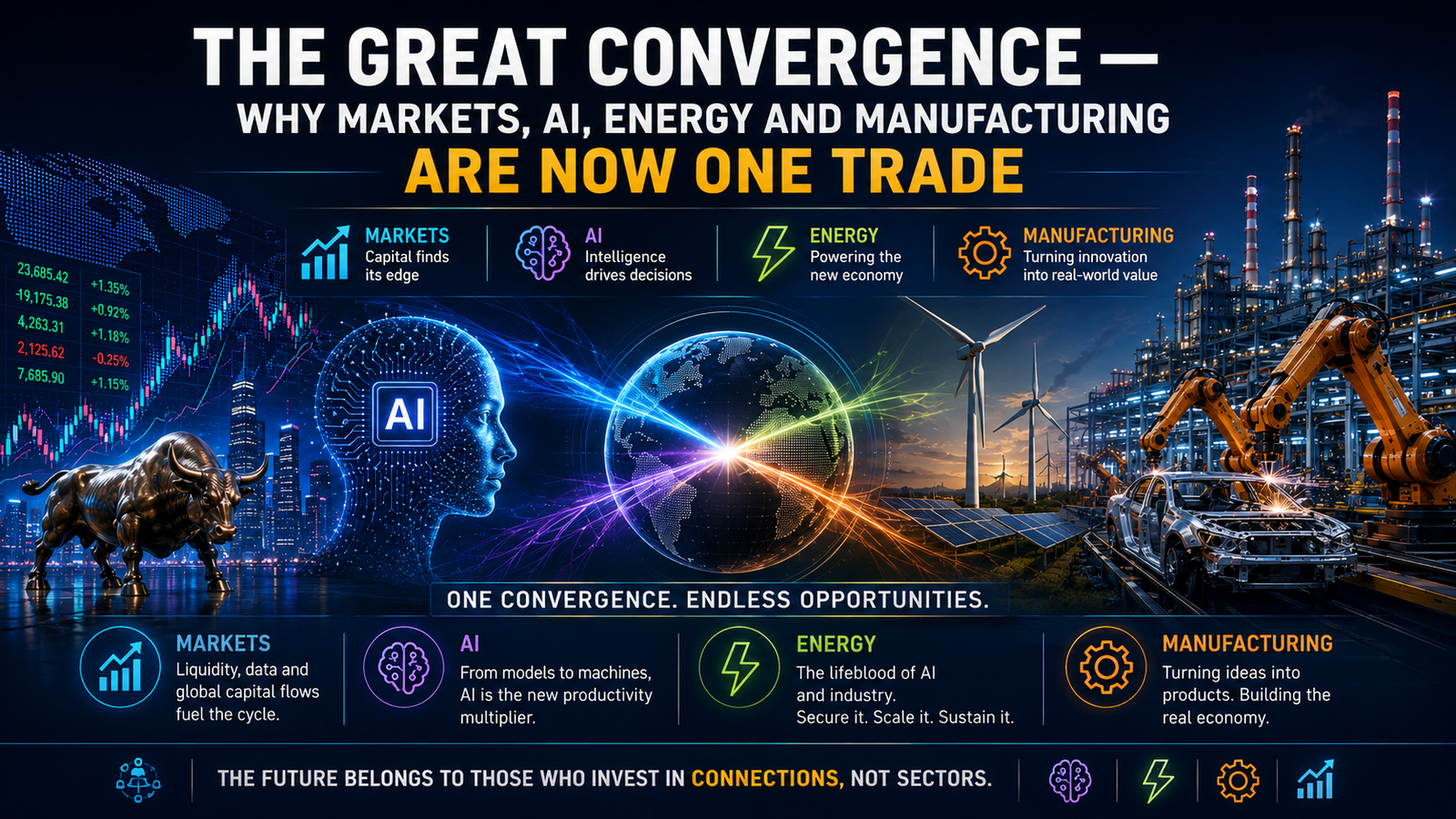
This is the great convergence shaping the next economic cycle.
For investors, the important question is changing.
It is no longer just
Which AI company will win?
The bigger question is
Which companies control the infrastructure behind the next economy?
AI Is Creating a Physical Economy
For years, technology was seen primarily as a software story.
The biggest companies built apps, platforms, and digital services that could scale rapidly.
AI is different.
AI may look digital to the user, but behind every AI interaction sits a massive physical infrastructure system.
AI Model → Computing Power → Chips → Data Centers → Electricity → Power Grid → Industrial Equipment
Every layer creates a new economic opportunity.
This means the AI revolution is no longer limited to technology companies. It is increasingly becoming an opportunity for:
- Semiconductor companies
- Data center operators
- Utilities
- Power equipment manufacturers
- Grid infrastructure companies
- Renewable and nuclear energy producers
- Battery manufacturers
- Copper and critical mineral suppliers
- Industrial automation businesses
The AI boom is becoming an infrastructure boom.
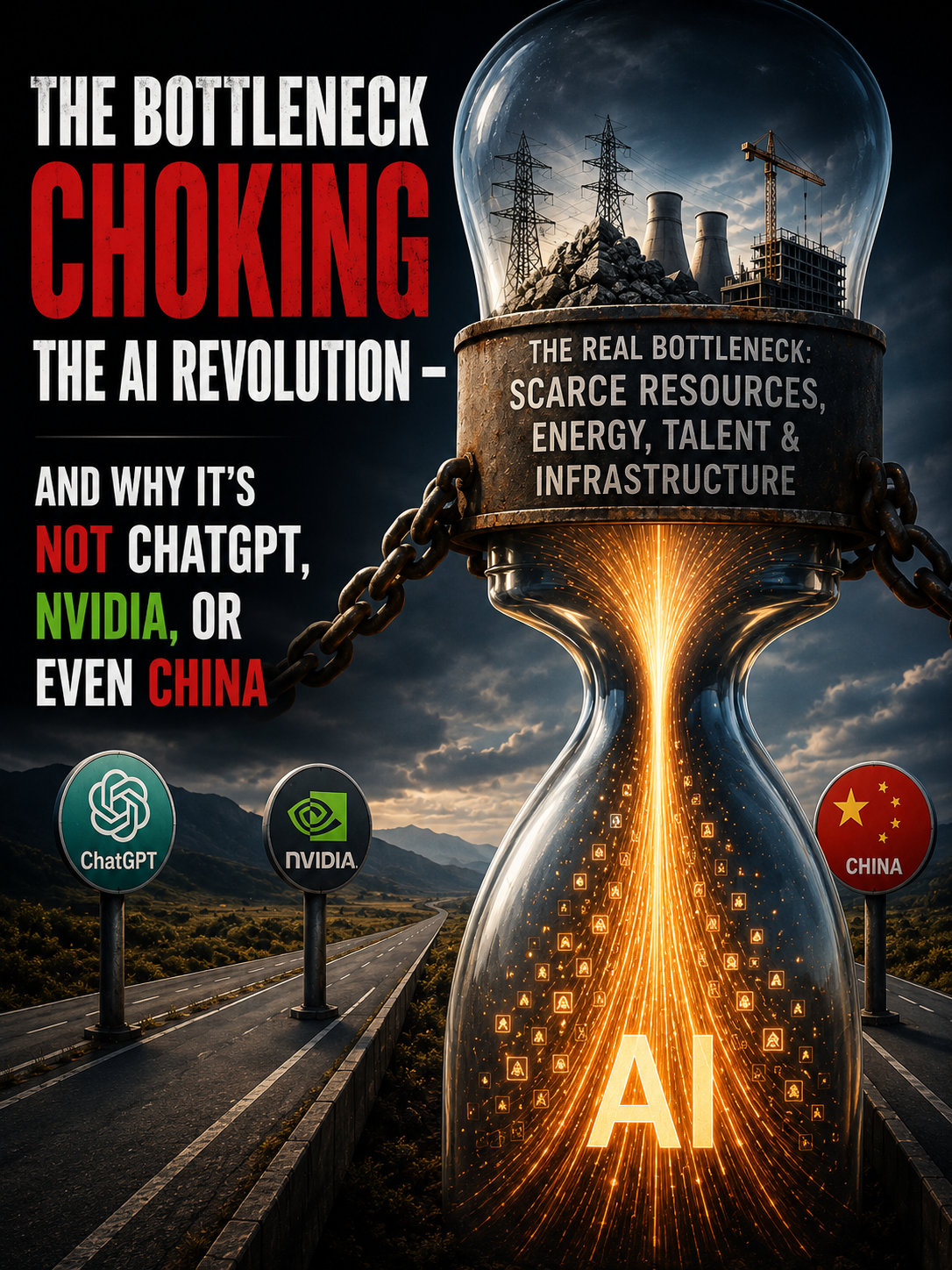
Power Could Become the Biggest Constraint
The next phase of technological growth will require something simple but increasingly strategic:
Reliable electricity.
AI systems need computing power.
Computing power needs data centers.
Data centers need electricity.
This creates a powerful structural trend: the digital economy is becoming more energy-intensive.
At the same time, electricity demand is being supported by several long-term forces:
- AI and data centers
- Electric vehicles
- Industrial electrification
- Battery storage
- Urbanization
- Economic growth
- Digital infrastructure
For decades, investors focused on oil as the fuel behind global economic growth.
In the next industrial cycle, electricity infrastructure could become equally important.
The investment opportunity is therefore much bigger than simply owning energy producers.
The entire ecosystem matters:
Generation + Transmission + Distribution + Storage + Equipment
Manufacturing Is Strategic Again
The global economy is also changing its view of manufacturing.
The old model focused heavily on efficiency and low-cost production.
The new model increasingly focuses on:
Security + Resilience + Technology + Domestic Capacity
Countries want stronger control over critical supply chains.
Semiconductors have become strategic.
Energy equipment has become strategic.
Defense manufacturing has become strategic.
Critical minerals have become strategic.
This is bringing manufacturing back to the center of economic policy.
But the factories of the future will look very different.
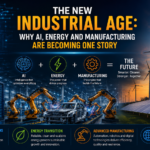
They will combine:
AI + Robotics + Automation + Sensors + Software
The next manufacturing revolution will not simply be about producing more goods.
It will be about producing smarter, faster, and with greater automation.
🇮🇳 India Is Positioned for the Next Cycle
For India, this convergence could create one of the most important growth opportunities of the coming decade.
India is simultaneously investing in:
- Digital infrastructure
- Manufacturing capacity
- Renewable energy
- Power infrastructure
- Transportation and logistics
- Electronics
- Semiconductors
- Defense production
These are not separate stories.
They are increasingly connected.
A stronger manufacturing base requires reliable energy.
More AI adoption requires digital infrastructure.
Digital infrastructure requires data centers.
Data centers require electricity.
Economic expansion requires roads, ports, logistics, and industrial capacity.
This creates what could become a multi-decade investment ecosystem.
The biggest opportunity may be found not in one sector but in the connections between sectors.
How Investors Should Think About the New Economy
The traditional approach is to search for the next winning stock.
A better approach may be to map the entire value chain.
For example:
The AI Value Chain
AI Applications
↓
Cloud & Software
↓
Data Centers
↓
Semiconductors & Servers
↓
Electricity
↓
Power Generation & Grid Infrastructure
↓
Copper, Equipment & Manufacturing
Every major economic boom creates its own infrastructure requirements.
The railway boom required steel.
The automobile boom required oil, roads, and manufacturing.
The internet boom required fiber networks, servers, and data centers.
The AI boom requires computing and electricity at an unprecedented scale.
That is why the next decade could create opportunities far beyond the companies making headlines today.
The Big Picture
The most important investment theme may not be AI.
It may be what AI forces the world to build.
More chips.
More data centers.
More power plants.
Stronger electricity grids.
More batteries.
More factories.
More critical mineral production.
More automation.
AI is accelerating a much bigger industrial transformation.
This is the real convergence:
AI creates demand.
Energy provides power.
Manufacturing builds the infrastructure.
Markets allocate the capital.
Understanding how these forces interact may be one of the most important skills for investors in the years ahead.
The companies that dominate the next cycle may not all be technology companies.
Some may be building the machines.
Some may be supplying the electricity.
Some may be manufacturing the equipment.
And some may be providing the materials that make the entire system possible.
Today’s Investor Takeaway
Don’t just follow the headline.
Follow the economic chain behind the headline.
When AI grows, ask:
Who supplies the chips?
Who builds the data centers?
Who provides the power?
Who upgrades the grid?
Who supplies the copper and equipment?
Who manufactures it all?
That is where the big picture becomes more important than the daily noise.
The next great investment cycle may be built where technology, energy, and industry collide.
What to Watch Next
1. AI Infrastructure—Chips, servers, networking, and data centers
2. Electricity Demand—The growing power needs of AI and industry
3. Grid Investment—Transmission, transformers, and distribution
4. Advanced Manufacturing—Robotics, automation, and industrial technology
5. India’s Industrial Growth—Manufacturing, infrastructure, and energy expansion
The future economy is not being built by one industry.
It is being built by an entire connected system.