







For decades, foreign equities, offshore trusts, and foreign property held by China’s elite operated in a regulatory grey zone. That era has officially ended.
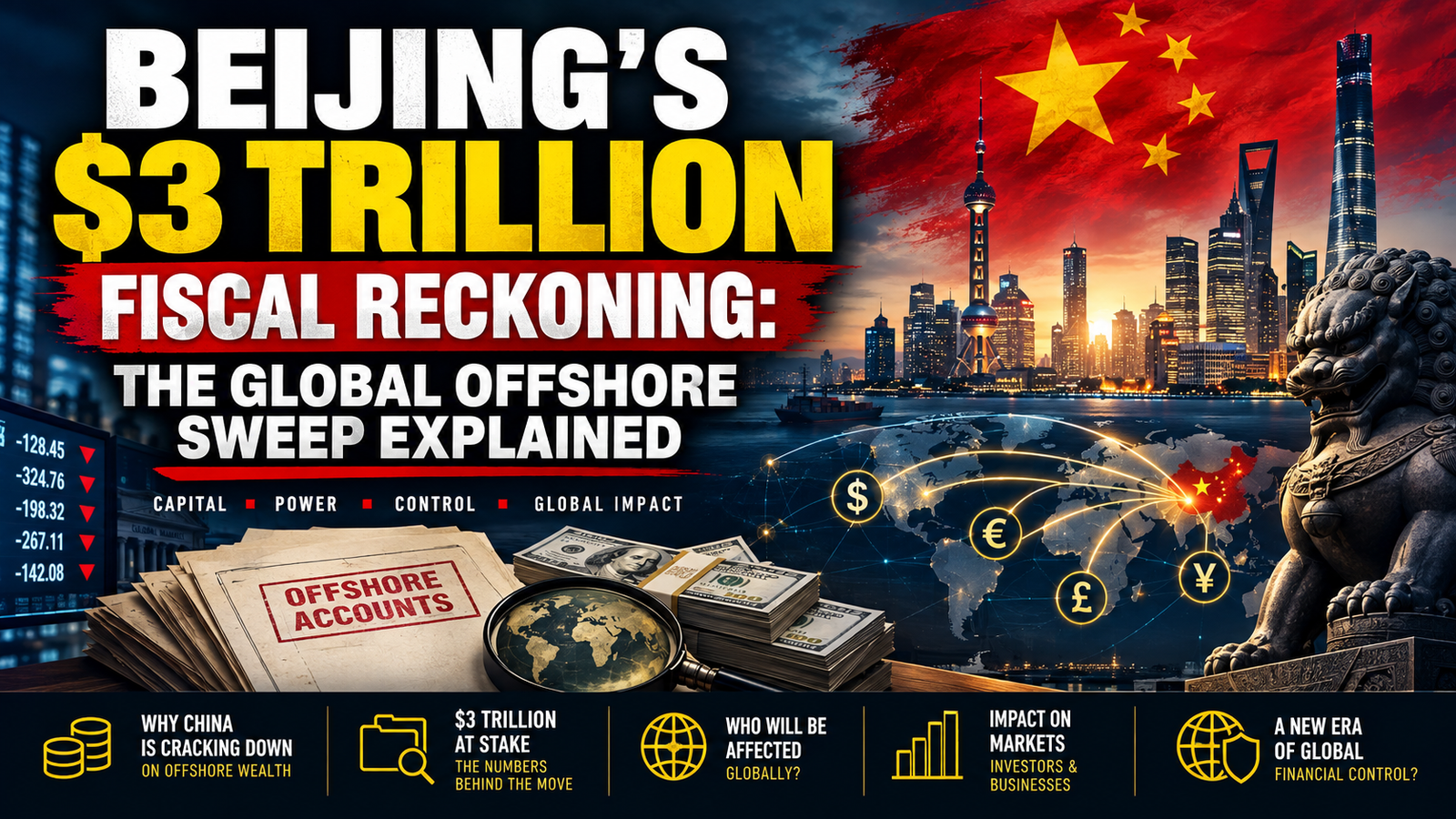
Beijing has launched one of the most aggressive fiscal audits in modern history—a global hunt for hundreds of billions of dollars in unpaid taxes on overseas capital gains. Crucially, tax authorities aren’t just looking at recent transactions; they are auditing records stretching back as far as 2000.
If you manage global wealth, advise family offices, or track international capital flows, this shift marks a critical turning point in global finance.
Why Now? The Fiscal Pressure Cooker
The timing of this enforcement campaign is no coincidence. China’s municipal and national budgets have felt severe post-pandemic strain. With tax revenues declining 1.7% to RMB 21.6 trillion ($3.2 trillion) in 2025 and property market revenues remaining sluggish, Beijing is seeking revenue where liquidity is densest: the ultra-high-net-worth (UHNW) segment.
According to economic policy analysts, the objective is two-fold:
- Replenish state coffers through cash fines and back-tax collection.
- Plug capital flight leaks by dismantling offshore structures designed to circumvent foreign exchange controls.
What Assets Are Under the Microscope?
Beijing’s tax bureau and domestic banking institutions are coordinating to audit a vast range of overseas assets:
- Offshore Trusts: A new joint directive from China’s Ministry of Finance imposes a multi-stage 20% tax on income generated by offshore trusts, closing a loophole long used by high-net-worth families.
- Foreign Insurance Policies: Regulators have begun levying a 20% tax on interest and dividends earned from offshore policies—a move that recently triggered double-digit drops in Asian-focused insurance equities.
- Capital Gains & Crypto: Historical profits from foreign real estate, international equity portfolios, precious metals, and digital assets are all subject to retroactive reporting.
The New Reality: “Pay Cash or Face Frozen Assets”
Enforcement is immediate and hard-hitting. Chinese banks are actively coordinating with tax officials to freeze domestic accounts of individuals under review. Account holders are reportedly paying fines in cash immediately to restore liquidity.
Simultaneously, China is bringing its tax framework closer to the US citizenship/residency-based worldwide taxation model. By demanding transparency on global assets, Beijing is narrowing the surface area where wealth can remain hidden from state oversight.
Key Takeaways for Wealth Managers & Family Offices
- Retroactive Exposure is Real: Assuming a standard 3- to 5-year audit window is no longer safe. Portfolios require historical forensic review going back to 2000.
- Trust Restructuring is Urgent: Standard offshore trusts no longer offer tax deferral or exemption for Chinese tax residents.
- Cross-Border Compliance is Mandatory: Automatic Information Exchange (CRS) mechanisms and banking cooperation make non-declaration an existential financial risk.
What are your thoughts on Beijing’s worldwide tax enforcement? How are wealth managers in your region adapting? Share your perspectives in the comments below.