





The Big Picture Framework: “The Shovel Wins the Gold Rush”
Here’s a counterintuitive truth that most Indian retail investors are missing right now:
You don’t have to own NVIDIA to profit from the AI revolution. You just need to own the companies selling shovels to the gold miners.
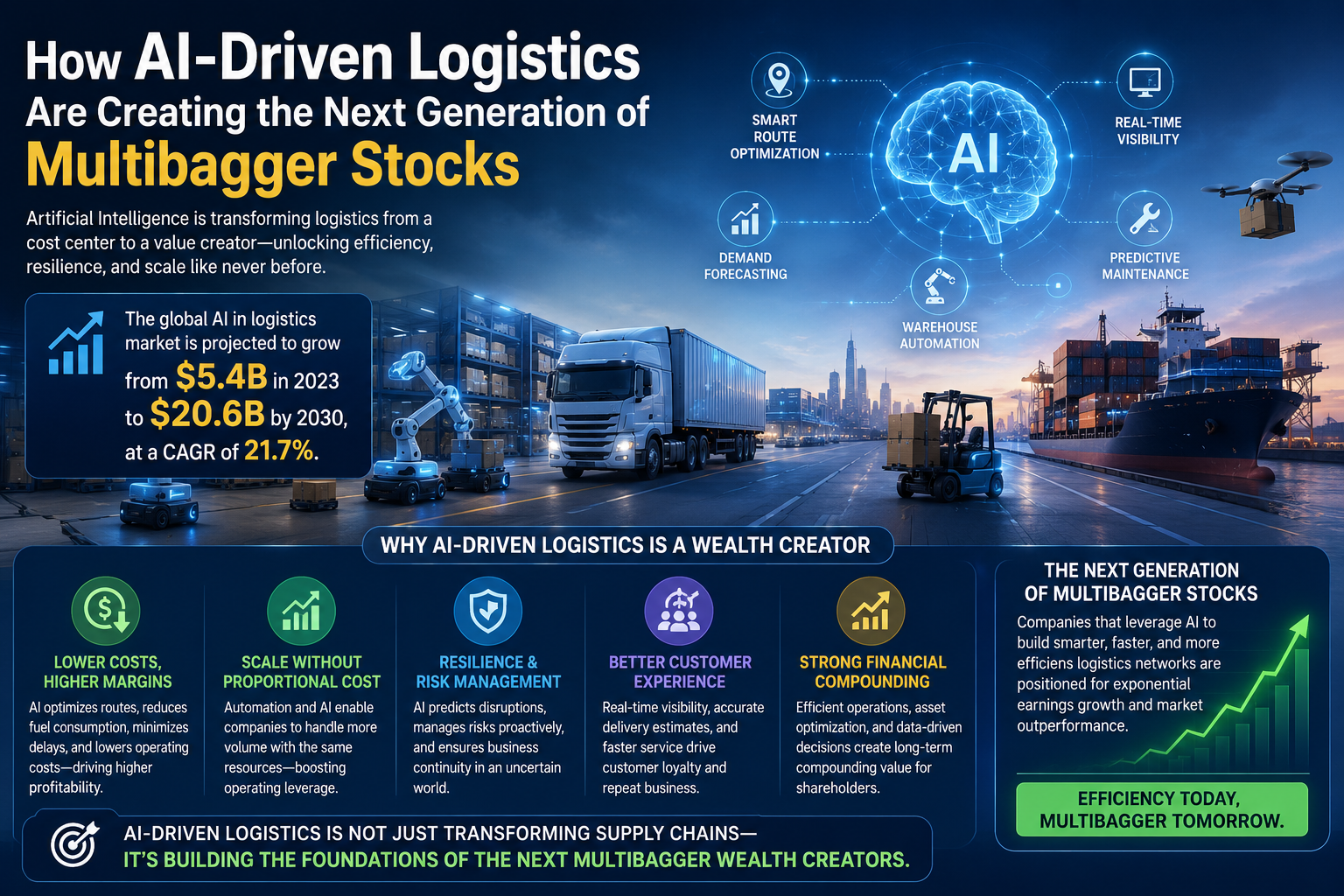
In 1849, the people who got rich during the California Gold Rush weren’t mostly the miners—they were the merchants selling picks, shovels, jeans (Levi Strauss), and food. Today’s AI boom is structurally identical. The miners are Microsoft, Google, Amazon, and Meta. The shovels? Fiber optic cables, cooling systems, transformers, GPU clusters, and power infrastructure. And India — quietly, powerfully — makes many of those shovels.
Let’s break this down completely.
Section 1: The Numbers Are Not Hype — They’re Historic
The scale of what’s happening in AI capital expenditure in 2026 is genuinely unprecedented in corporate history.
According to first-quarter 2026 earnings reports, Google, Microsoft, Meta, and Amazon alone plan to spend a combined $725 billion on capital expenditure in 2026 — a staggering 77% jump from the $410 billion they spent in 2025.
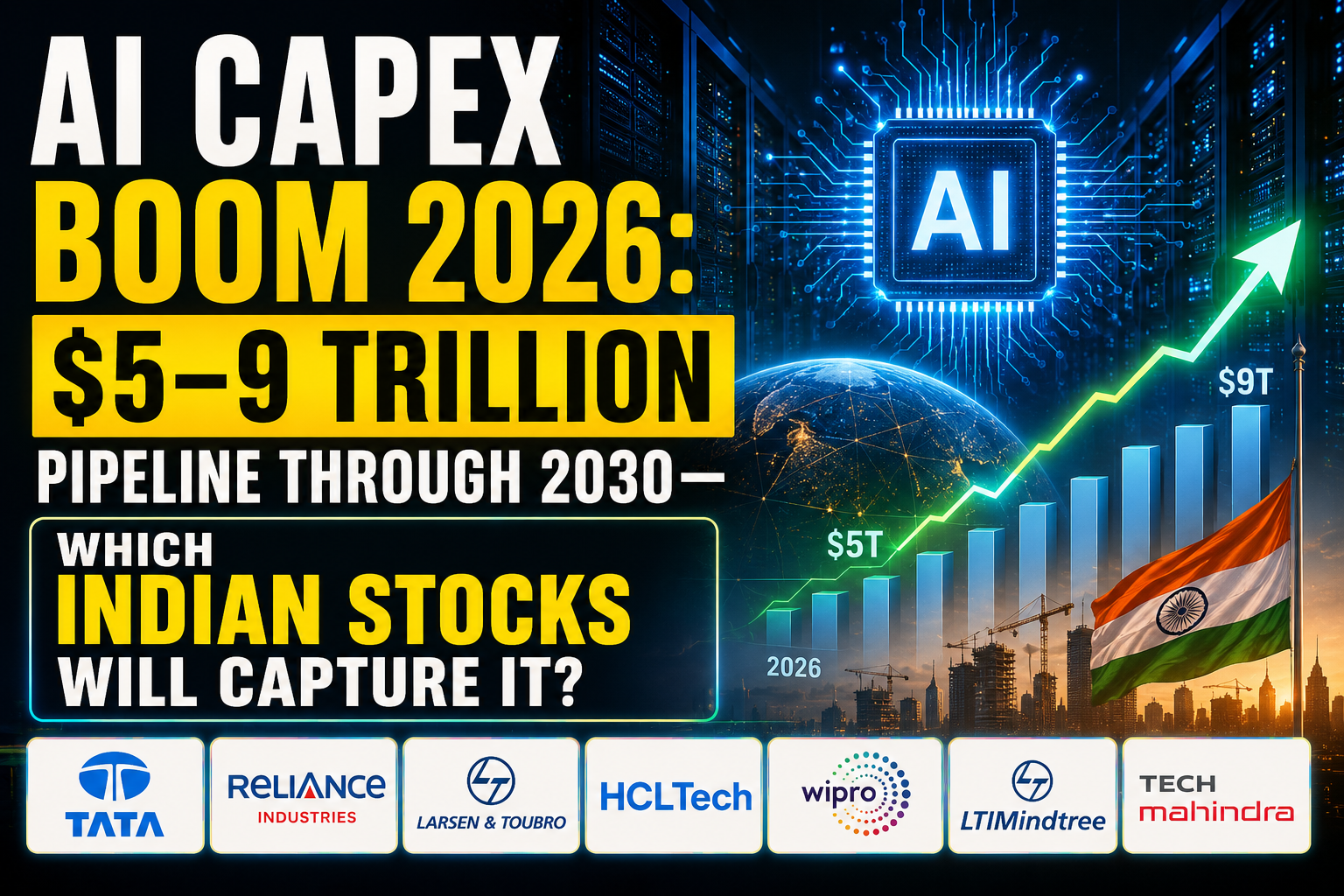
Zoom out further: Citigroup raised its global AI capex forecast for 2026–2030 to $8.9 trillion, up from an earlier estimate of $8 trillion. Wall Street analysts at Evercore and Bank of America are already projecting total AI capex crossing $1 trillion in 2027 alone.
Here’s the per-company breakdown for 2026:
| Company | 2026 Capex Estimate | YoY Change |
|---|---|---|
| Amazon | $200 billion | +~25% |
| Alphabet (Google) | $180–190 billion | +81% net income |
| Microsoft | $190 billion | +24% (vs analyst forecast of $152B) |
| Meta | $125–145 billion | +70–90% from 2025 |
| Oracle | $50 billion | Rapid acceleration |
| Total (Big 5) | ~$725–760 billion | +77% |
And this doesn’t even count OpenAI’s planned $1.4 trillion data center build or investments from Anthropic, xAI, CoreWeave, and dozens of “neoclouds.”
Microsoft’s CFO Amy Hood explicitly told investors that $25 billion of their budget increase was purely due to rising memory chip and component costs—and the company still expects to be GPU-capacity constrained through the end of 2026.
My take: When a company spends more than its original total budget just on price increases, you know supply is strangled and demand is insatiable. This isn’t a spending bubble — it’s a structural infrastructure deficit.
Section 2: Why India Is Uniquely Positioned (The “Picks & Shovels” Angle)
India’s $5.4 trillion stock market has lagged global AI rallies in 2026—mostly because we don’t have listed stocks like NVIDIA, Broadcom, or AMD. But here’s what most investors aren’t seeing:
India is building the physical backbone of the global AI economy.
Every AI data center needs:
- Fiber optic cables to move data at terabit speeds
- Power transformers and electrical systems to handle 10–100 MW loads
- Precision cooling systems because GPUs run at temperatures that can melt standard hardware
- Server racks and HPC infrastructure
- Renewable energy to run it all sustainably
According to CBRE Group, India’s data center market is forecast to exceed $100 billion by 2027. Google has made a $10 billion bet on India. Amazon continues expanding cloud infrastructure. Reliance Industries signed an $11 billion data center deal. AdaniConnex has partnered with global tech firms to build gigawatt-scale campuses.
A Bloomberg equal-weighted index of 28 Indian companies in the data center supply chain has already gained approximately 45% in 2026, adding nearly $48 billion in market value—even as the broader Nifty 500 shed over $300 billion.
Section 3: The Indian Stocks Already Winning (and What to Watch)
🔥 TIER 1 — Already Running Hot
Sterlite Technologies (STL | NSE: STLTECH) The standout story of 2026. STL, backed by the Vedanta Group, secured a multi-year Product Award Letter worth over $1.1 billion from a US-based hyperscaler for AI data center fiber solutions running FY27–FY29. The stock has rallied over 550% year-to-date in 2026. CLSA raised its target price by 60% to ₹655 with an “Outperform” rating. AI data centers require 36x more fiber than traditional CPU racks due to GPU density — STL’s specialization is perfectly timed.
Risk: stock is in T2T (Trade-to-Trade) segment; expect volatility.
HFCL Ltd (NSE: HFCL) Another optical fiber and telecom infrastructure beneficiary. HFCL’s subsidiary HTL Limited is expanding manufacturing for data center interconnects. Its order book stands at approximately ₹21,200 crore, with demand rising from the US, Europe, and Asia. Stock has rallied over 200% YTD.
⚡ TIER 2 — The Infrastructure Enablers
E2E Networks (NSE: E2ENETWORKS) India’s closest thing to a listed hyperscaler. Specializes in Cloud GPU infrastructure and is procuring ~2,048 NVIDIA Blackwell B200 GPUs. Partners with L&T for its Chennai GPU cluster. Has a direct role in the IndiaAI Mission. Revenue grew 21.3% YoY in Q2 FY26 — though current losses reflect high depreciation from GPU capex.
MTAR Technologies (NSE: MTARTECH) Supplies precision cooling and power management components used directly in data centers. Rallied approximately 250% YTD before a recent correction.
Netweb Technologies India (NSE: NETWEB) Manufactures high-performance computing servers and AI infrastructure solutions. Cited as a direct beneficiary of the domestic AI hardware push.
🏗️ TIER 3 — Indirect but Powerful Plays
Larsen & Toubro (NSE: LT) Bernstein flagged L&T as a direct beneficiary. Already partnering with E2E Networks on GPU-ready data center campuses. L&T’s EPC capabilities position it perfectly for the massive civil construction required for data centers.
NTPC (NSE: NTPC) & Adani Green Energy (NSE: ADANIGREEN) Power is the bottleneck of the AI era. Every data center needs gigawatts of reliable power. NTPC and Adani Green are indirect beneficiaries via exploding energy demand.
Section 4: The Risk Nobody Is Talking About
Let me be direct with you—because most content won’t be.
These stocks have already had monster runs. STL at +550%, HFCL at +200%, MTAR at +250% — these aren’t starting points for conservative investors. They’re already pricing in significant execution. Some have hit lower circuits after rapid rallies.
Key risks:
- Execution risk: Hyperscaler capex is real, but contracts take time to convert to revenue
- Valuation risk: High depreciation from GPU capex is eating profits (see E2E Networks)
- Volatility risk: When global AI sentiment shifts (as it did briefly in June 2026), these stocks fall 8–10% in a session
- Competition risk: Global fiber and infrastructure suppliers are competing for the same contracts
The prudent approach: Don’t chase the stocks already up 500%. Instead, look at the second layer—power, cooling, and civil construction—where the rally is earlier-stage and valuations are less stretched.
Section 5: My “Big Picture” Framework — The 3 Layers of AI Capex Opportunity
Think of Indian AI exposure in 3 concentric rings:
Ring 1—The GPU Layer (Mostly inaccessible to Indian investors directly): NVIDIA, AMD, Broadcom. You need to invest via US markets or through India-listed global tech ETFs.
Ring 2 — The Connectivity Layer (Already hot, partially priced) Sterlite Technologies, HFCL, Netweb Technologies. These have moved. Still structural, but entry timing matters.
Ring 3 — The Foundation Layer (Early-stage opportunity) Power infrastructure (NTPC, Adani Green), civil construction/EPC (L&T), cooling systems, real estate (data center parks). This layer is the least priced and has the most multi-year runway.
My personal bet: Ring 3 is where the next 3-year compounders will come from. The market hasn’t fully connected the dots between “AI needs power” and India’s listed power infrastructure companies.
Section 6: The India-Specific Tailwind Nobody Mentions
India has a structural advantage in this cycle that is rarely discussed:
- IndiaAI Mission—A government-backed program targeting 100,000+ GPUs by the end of 2026, with NVIDIA as a key partner alongside Yotta, L&T, and E2E Networks.
- Data Localization — Indian regulations are pushing global tech firms to build local compute capacity, not just access US clouds.
- Cost Advantage — India’s power and land costs for data centers are competitive versus Southeast Asia and Europe.
- Engineering Pool — The talent to build, manage, and operate AI infrastructure is abundant and cost-effective.
This isn’t just an infrastructure play—it’s a sovereignty play. Countries that control their own AI compute are the ones that will lead the next economic decade.
Call to Action
If you found this analysis useful:
- 📌 Save this article—you’ll want to reference it as Q2 FY27 results start rolling in
- 📩 Subscribe to our newsletter for weekly deep-dives on Indian stocks at the intersection of global macro and local opportunity
- 💬 Drop a comment: Which “Ring” of AI exposure do you currently own?
- 📊 Watch for L&T Q1 FY27 earnings commentary on data center order inflows—that will be the next signal
Disclaimer: This is not financial advice. All investments carry risk. Do your own research before making any investment decisions.
Read: THE LIQUIDITY CYCLE: How Global Money Flows Create Booms, Busts, and Investment Opportunities: An Institutional-Grade Guide to Profiting from Global Liquidity Cycles