







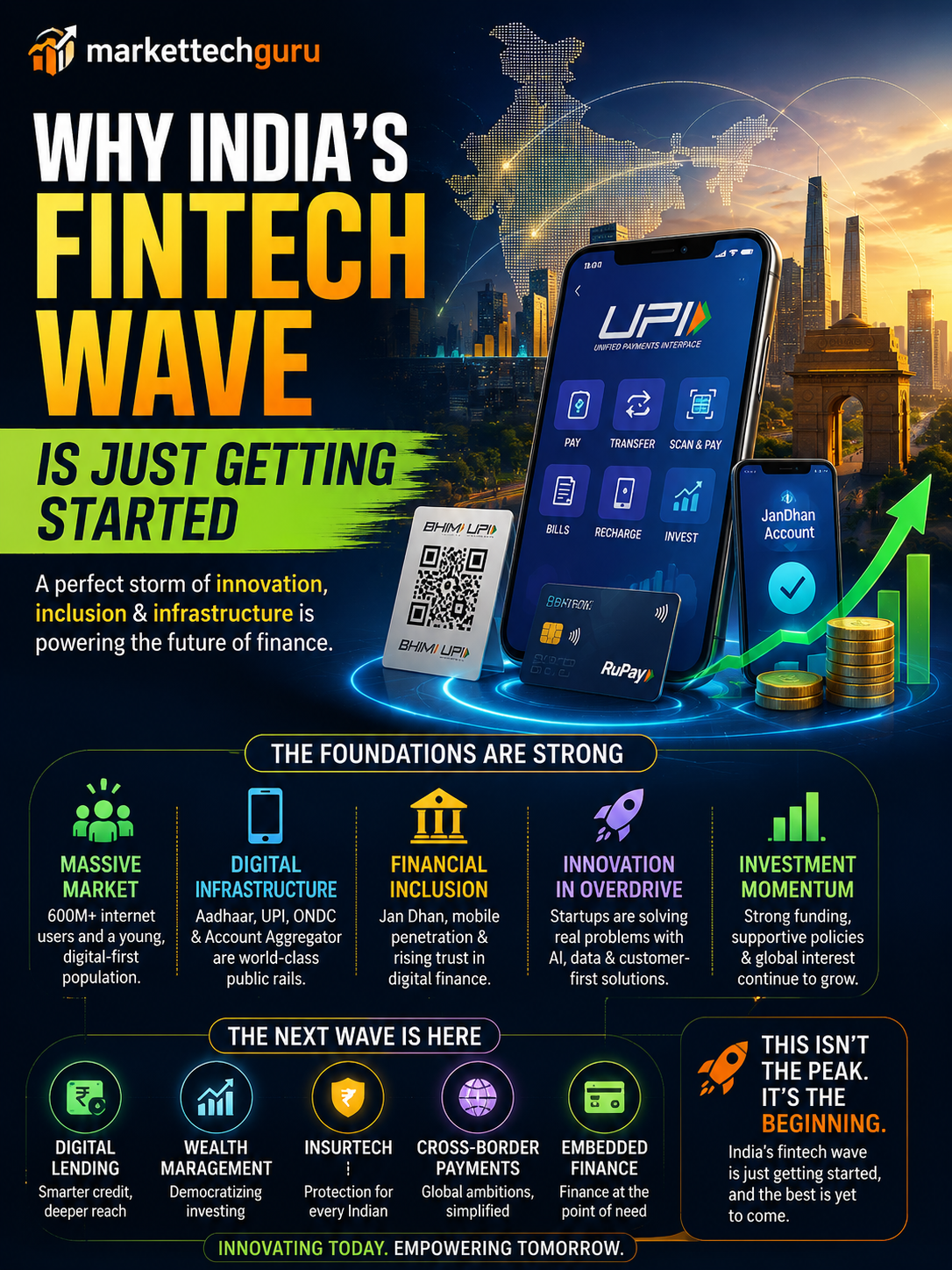
Everyone said the fintech boom was over. The venture money dried up, valuations cratered, and the press moved on to the next shiny thing. But here’s what the headlines missed: the infrastructure play is just getting started.
“Most people confuse the hype cycle for the growth cycle. In India’s fintech story, we haven’t even hit chapter two.”
I spent the last three weeks going deep into UPI transaction data, RBI reports, DPIIT filings, and funding trackers. What I found doesn’t look like a slowdown. It looks like a launchpad.
₹20.6L Cr
UPI transactions in FY24
14 Cr+
New demat accounts in 2 years
₹4.2L Cr
BNPL market size by 2026E
52%
Indians still underserved by banks
The Three Shifts Nobody Is Talking About
1. From consumer fintech to infrastructure fintech. The first wave was about apps—PhonePe, Paytm, and CRED. Everyone wanted the consumer relationship. The next wave is about the plumbing: account aggregators, credit infrastructure, ONDC integrations, and embedded finance APIs. This is where the durable businesses are being built, and it’s largely invisible to casual observers.
2. From urban to Bharat. The first 200 million fintech users were relatively easy to acquire—English-speaking, smartphone-ready, and credit-aware. The next 400 million are a completely different game. Vernacular interfaces, voice-first UX, and assisted models through business correspondents. Companies cracking this layer will build category-defining businesses.
3. From lending to wealth. India’s mutual fund SIP book crossed ₹21,000 crore/month in 2024. Demat accounts doubled in three years. Smallcase, Zerodha, Groww, and newer players are now fighting over the 140 million emerging retail investors. The wealth management gap in India is a ₹50 lakh crore opportunity waiting to be served properly.
The Data That Changed My View
Let me give you three numbers that reframed everything for me:
India’s credit-to-GDP ratio is 56%. The US sits at 250%+. South Korea at 180%+. Even emerging market peers like Brazil are at 95%+. India is massively underpenetrated on formal credit. Every percentage point of catch-up is trillions of rupees in lending opportunity—and the digital rails to serve it are now in place.
Only 31% of Indian MSMEs have access to formal credit. There are 63 million MSMEs in India. The credit gap is estimated at ₹25 lakh crore. Every fintech player with a lending license and a data moat is looking at this number every morning.
India’s insurance penetration is 4.2% of GDP vs. a global average of 7%. InsurTech is the most underloved sector in Indian fintech — and that’s exactly why it’s interesting.
What This Means for Investors
The listed fintech space in India is messy right now. Paytm went through its well-documented challenges. PB Fintech (PolicyBazaar) has matured. Nuvama, Angel One, and Motilal are riding the wealth wave. But the real action is in the unlisted space—account aggregator plays, embedded lending stacks, and neobanks targeting specific communities (farmers, gig workers, and women).
For public market investors, three themes are worth watching: wealth management platforms (beneficiaries of the SIP and demat boom), payment infrastructure companies (not the apps, the picks-and-shovels underneath), and NBFC-fintechs with genuine data advantages in underserved credit segments.
My Three Predictions for 2025–26
Prediction 1: At least two account aggregator-enabled credit products will go mainstream for MSME lending, disbursing ₹10,000+ crore in the next 18 months.
Prediction 2: The first pure-play InsurTech will file for an IPO in India. The valuations will surprise everyone on the upside.
Prediction 3: WhatsApp Pay will finally crack 100 million monthly active users — and when it does, it will reshape the competitive dynamics of every payments company overnight.