









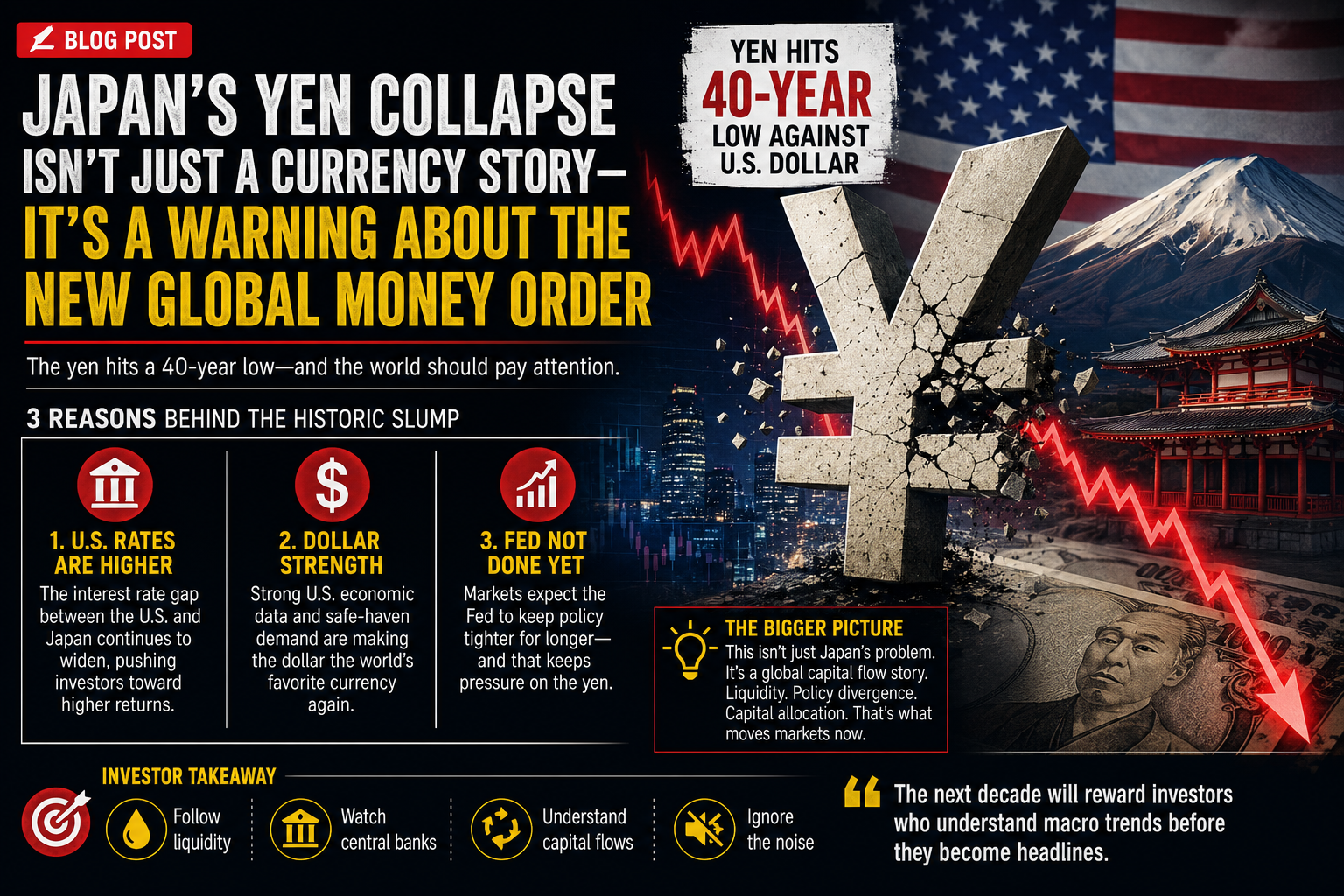
When most investors hear that the Japanese yen has crashed to a 40-year low, they think it’s simply another foreign exchange headline.
It isn’t.
This is one of the biggest macroeconomic signals of 2026.
The world’s third-largest economy is facing a currency crisis that reflects something much bigger than Japan itself. It highlights how global capital is flowing, how central banks are diverging, and why investors must rethink their portfolios.
Why Is the Yen Falling?
Three powerful forces are driving the decline.
1. America Pays More Than Japan
Money follows yield.
While the U.S. continues to offer relatively higher interest rates, Japan has maintained a much looser monetary stance. Investors naturally move their capital toward higher returns.
Result?
They sell yen and buy dollars.
2. The Dollar Has Become the World’s Safe Haven Again
Strong U.S. economic data and expectations that the Federal Reserve could keep policy tighter have strengthened the dollar globally. That has put intense pressure on many currencies—but none more dramatically than the yen.
3. Markets Believe the Fed Isn’t Done Yet
Currency markets don’t react to today’s rates.
They react to tomorrow’s expectations.
If investors believe U.S. interest rates will remain elevated—or even rise further—the dollar becomes even more attractive.
That’s exactly what’s happening today.
The Bigger Story Nobody Is Talking About
The yen isn’t collapsing because Japan suddenly became weak.
It is collapsing because global capital has become incredibly selective.
Money today flows where it earns the highest real return.
This is the new era of investing.
Liquidity matters.
Interest-rate differentials matter.
Capital flows matter more than headlines.
What Does This Mean for Investors?
A weaker yen creates both winners and losers.
Potential Winners
- Japanese exporters
- Global companies earning revenue in dollars
- U.S. financial assets
Potential Losers
- Japanese consumers
- Import-dependent businesses
- Countries relying heavily on dollar-priced commodities
Could Japan Intervene?
History suggests yes.
Japanese authorities have previously stepped into currency markets when volatility became excessive. However, intervention alone rarely changes the long-term trend unless monetary policy also shifts. Officials have again signaled readiness to act if moves become disorderly.
The Investment Lesson
Currencies are no longer just exchange rates.
They have become real-time indicators of global power, capital allocation, and monetary policy.
The yen’s historic decline tells investors one important thing:
Follow liquidity—not emotions.
The next decade will reward investors who understand macro trends before they become headlines.