









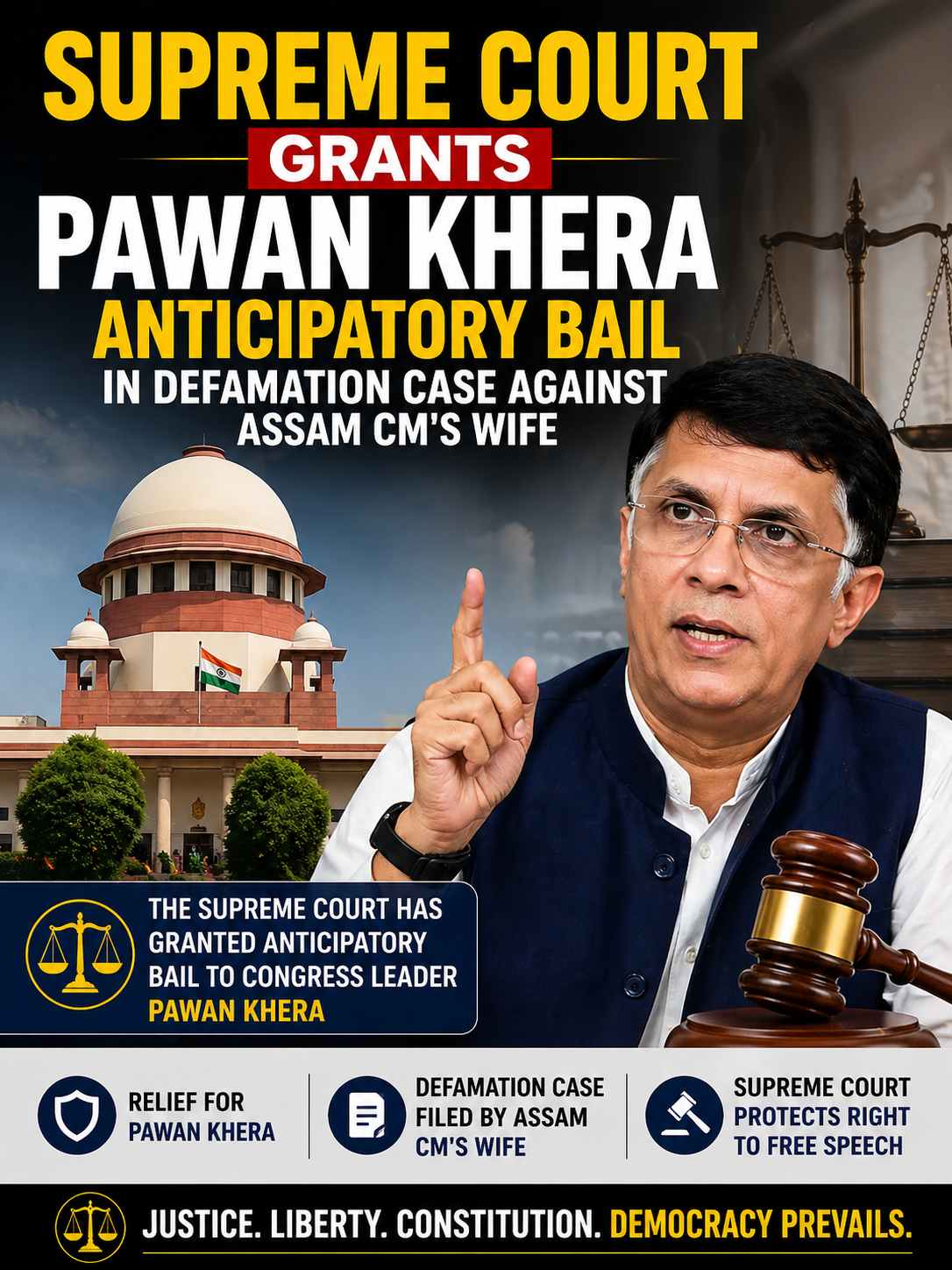
In a significant ruling, the Supreme Court has granted anticipatory bail to Congress leader Pawan Khera amid allegations of making defamatory statements against Riniki Bhuyan Sarma, wife of Assam Chief Minister Himanta Biswa Sarma. The decision overturns a Gauhati High Court order that had rejected Khera’s plea, citing him as a potential flight risk and pointing to serious charges like cheating and forgery.
The apex court bench, comprising Justices JK Maheshwari and AS Chandurkar, emphasized that the accusations and counter-claims appear “politically motivated.” They argued that personal liberty—a fundamental right—shouldn’t be curtailed lightly, especially when political rivalries seem at play. “No need for custody during interrogation in such cases,” the order stated, directing Khera to cooperate fully with investigators, appear when summoned, and avoid tampering with evidence. He also can’t leave India without court approval, and the trial court can add conditions if required.
This stems from Khera’s April 4 press conference, where he claimed Riniki Sarma holds passports from three countries and owns undisclosed luxury properties in Dubai via a US-registered firm, backed by certain documents. The Sarma family dismissed these as “AI-generated fakes” spread by Pakistani social media accounts, leading to a police complaint in Guwahati.
During hearings, senior advocate Abhishek Manu Singhvi, representing Khera, slammed the case as “unprecedented” and highlighted that defamation charges typically don’t warrant arrest. He referenced provocative statements by the CM and questioned the need for custody. Solicitor General Tushar Mehta countered that interrogation is essential to verify the documents’ origins, hinting at possible foreign interference ahead of Assam’s recent assembly elections (held April 9, results due May 4).
This marks Khera’s second Supreme Court appearance in weeks; earlier, on April 17, the court upheld a stay on his transit bail from Telangana HC to shield him from Assam police arrest. The ruling underscores the judiciary’s role in balancing investigation needs with individual rights amid high-stakes political battles.